Is XERF Right for You? A Guide to Non-Surgical Skin Tightening at Dr Dray Clinic London
If you’ve recently noticed your jawline looking a little softer, the skin around your neck feeling less firm, or early signs of jowling, you may be wondering whether a treatment like XERF could help.
XERF is a next-generation, non-surgical skin tightening treatment that uses dual-frequency monopolar radiofrequency to lift, firm and remodel the skin without needles, incisions or significant downtime. At Dr Dray Clinic London, it is used for patients who want a fresher, firmer and more naturally lifted appearance without looking over-treated.
The treatment is particularly well suited to patients who are beginning to notice early signs of skin laxity, but who are not ready for surgery. Rather than creating a dramatic or artificial change, XERF is designed to support the skin’s own collagen and elastin production, helping to improve firmness, contour and skin quality over time.
Who Is XERF For?
XERF is best suited to patients who want subtle lifting, improved firmness and better definition without surgery.
It may be suitable if you are noticing:
- Mild-to-moderate skin laxity
- Early jowling
- Softening jawline definition
- Mild neck laxity
- Crepey skin on the neck or lower face
- Loss of facial firmness
- Skin that feels less elastic or supported
- Early heaviness through the lower face
- Mild looseness after weight loss
Most patients considering XERF are in their 30s to 60s and are looking for a preventative, maintenance or early-intervention treatment. However, suitability is not based on age alone. Skin quality, collagen reserve, anatomy, lifestyle and the degree of laxity are all more important than age.
Many patients choose XERF as a way of addressing skin laxity early, before it progresses to the point where more invasive treatments need to be considered.
What Happens During a Consultation?
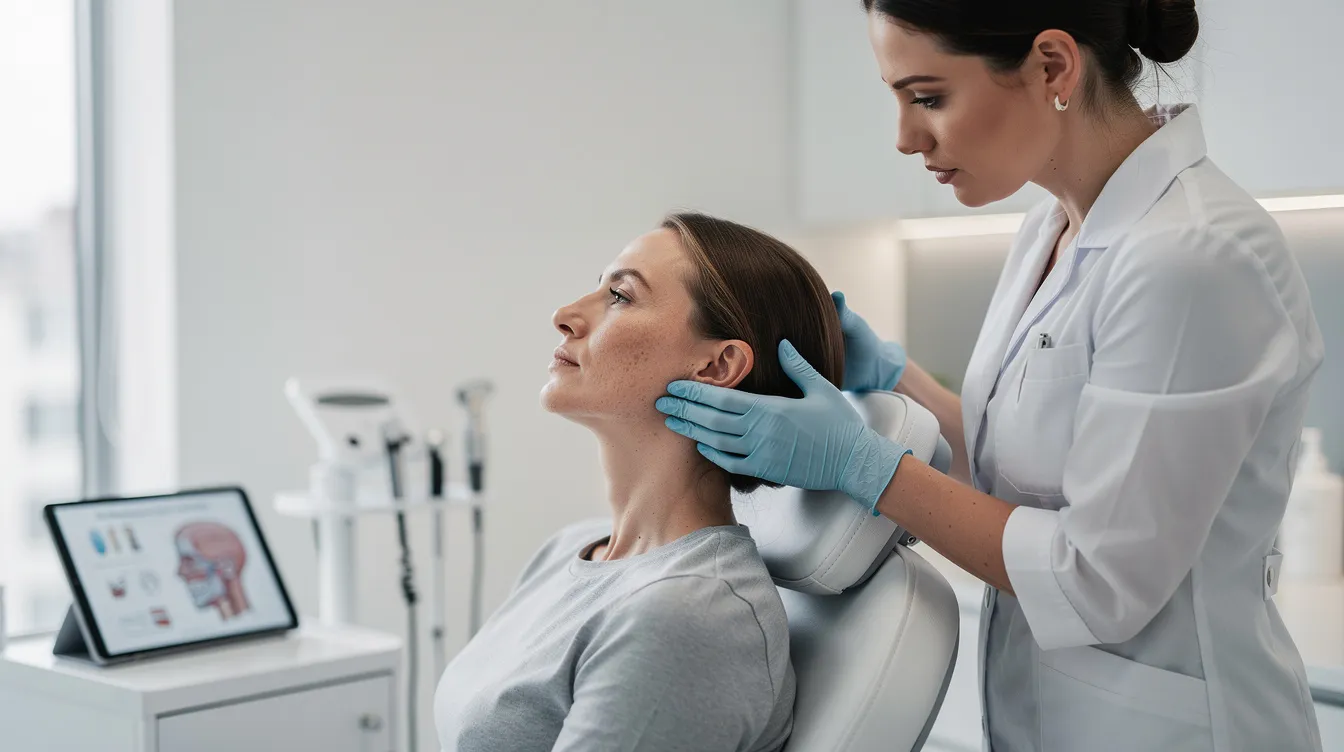
A consultation at Dr. Dray Clinic London is the most important step in deciding whether XERF is appropriate.
We typically assess:
● Skin quality and elasticity
● Degree of laxity
● Facial structure and balance
● Previous treatments
● Your goals and expectations
We may also discuss whether alternative or complementary treatments such as injectables,
skin boosters, or laser treatments would be more suitable.
There is no obligation to proceed with treatment after consultation.
What Does XERF Actually Do?

XERF uses controlled radiofrequency energy to heat the skin and deeper tissue layers. This heat stimulates a natural tissue response, encouraging collagen contraction in the short term and collagen remodelling over the following weeks and months.
In practical terms, XERF is designed to help with:
- Skin tightening
- Jawline refinement
- Lower-face firming
- Neck tightening
- Mild jowl softening
- Collagen stimulation
- Elastin support
- Improved skin texture
- A subtle lifting effect
Unlike treatments that only work on the surface of the skin, XERF is designed to treat multiple tissue depths. Its dual-frequency technology combines 6.78 MHz and 2 MHz radiofrequency, allowing treatment of both more superficial dermal layers and deeper support structures associated with facial firmness and contour.
This makes it particularly useful for patients whose concerns are not just about skin texture, but also about facial support, laxity and definition.
How Does XERF Create a Lifting Effect?
XERF works by delivering controlled heat into collagen-rich tissues. When collagen is heated to the correct therapeutic temperature, it can contract and tighten. This may create an early feeling of firmness or subtle lift shortly after treatment.
Over time, the more important process is collagen and elastin remodelling. The heat delivered during treatment stimulates fibroblast activity, encouraging the skin to produce new structural proteins. This can gradually improve skin strength, elasticity and firmness.
It’s important to understand that XERF is not trying to mimic the result of a surgical facelift. Instead, the aim is to create a fresher, firmer appearance through gradual collagen remodelling and tissue support.
Am I a Good Candidate for XERF?
A simple way to think about it is this: if you still recognise your face, but feel it looks a little less firm or defined than it did a few years ago, XERF may be worth exploring.
Common signs that XERF may be suitable include:
- Your jawline looks softer than it used to
- You are beginning to see mild jowls
- The skin under your chin feels looser
- Your neck skin is starting to crease or look crepey
- Your lower face feels less supported
- Your skin still has some elasticity
- You want natural-looking improvement
- You want to avoid surgery, needles or prolonged downtime
XERF is often ideal for patients who are not yet at the stage of significant skin excess, but who want to improve laxity early and maintain their facial structure over time.
Who Is Less Suitable for XERF?
XERF is not the right treatment for everyone.
It may not be enough on its own if you have:
- Significant loose skin
- Advanced facial sagging
- Heavy jowls
- Severe neck laxity
- Prominent platysmal bands
- Marked skin redundancy after major weight loss
- A strong expectation of surgical-level lifting
In these cases, XERF may still have a role as part of a wider treatment plan, but it should not be presented as a replacement for surgery.
At Dr Dray Clinic London, we are careful to be honest about what XERF can and cannot achieve. If your concerns are more advanced, we may recommend a combination approach or advise whether a surgical opinion would be more appropriate.
Is XERF a Non-Surgical Facelift?
XERF can create a non-surgical lifting and tightening effect, but it is not the same as a surgical facelift.
A facelift physically repositions tissues and removes excess skin. XERF does not cut, remove or surgically reposition tissue. Instead, it uses radiofrequency energy to tighten collagen-rich structures and stimulate gradual remodelling.
For patients with mild-to-moderate laxity, this can create a visible improvement in firmness and definition. For patients with more advanced sagging, surgery may still be the more appropriate option.
A good way to think about XERF is:
XERF is not a replacement for a facelift. It is a non-surgical treatment for patients who want earlier, subtler, natural-looking tightening before surgery becomes necessary.
XERF for Jawline Definition

The jawline is one of the most popular areas for XERF treatment.
As collagen declines and facial support changes with age, the jawline can start to lose its clean definition. Patients may notice early jowls, heaviness near the mouth or a blurred transition between the face and neck.
XERF can help by heating the skin and deeper support layers to encourage tightening and remodelling. In suitable patients, this may create a firmer, sharper-looking jawline and a more refined lower face.
This is particularly appealing for patients who do not want filler, do not want surgery, or feel that their concern is more about laxity than volume loss.
XERF for Jowls
For many patients, early jowling is one of the first visible signs of facial ageing.
Jowls form due to a combination of skin laxity, collagen loss, volume changes and tissue descent. XERF can help support mild jowling by improving firmness and tightening the tissues around the lower face and jawline.
It is most effective when jowling is mild to moderate. If jowls are heavy or associated with significant skin excess, XERF may need to be combined with other treatments or may not be sufficient on its own.
XERF for Neck Tightening
The neck is another area where patients often seek non-surgical tightening.
Common neck concerns include:
- Crepey skin
- Mild looseness
- Horizontal neck lines
- Reduced firmness under the chin
- Loss of definition between the jawline and neck
XERF can be used to improve skin firmness and support in the neck area, particularly when laxity is early or moderate. It may be especially useful for patients who want a non-invasive treatment with minimal downtime.
For more complex neck concerns, such as prominent muscle bands, excess fat or significant loose skin, a combination approach may be recommended.
XERF Around the Eyes
XERF may also be used carefully around the eye area in suitable patients. This can be helpful for mild skin laxity, fine lines, brow heaviness or early eyelid looseness.
The eye area is delicate, so treatment requires careful assessment, appropriate settings and precise technique. At Dr Dray Clinic, treatment around the eyes is planned conservatively, with a focus on safety, subtle lifting and natural-looking rejuvenation.
What Results Can You Expect From XERF?
XERF results are usually subtle, progressive and natural-looking.
Some patients notice a mild tightening effect shortly after treatment, but the main improvement develops gradually as collagen remodelling takes place.
Possible improvements include:
- Firmer-feeling skin
- Better jawline definition
- Mild jowl softening
- A more supported lower face
- Improved neck firmness
- Smoother skin texture
- A subtle lifted appearance
- A fresher, more rested look
The best results are often the ones that don’t immediately look like you’ve had a treatment at all. The aim is to make your skin and facial contours look firmer, fresher and more supported.
How Long Do XERF Results Take?
XERF works gradually because collagen stimulation takes time.
Some patients notice an immediate feeling of firmness or tightness, but the most meaningful changes usually develop over several weeks and months.
A typical timeline is:
Immediately after treatment:
Some patients notice mild tightening, warmth or a firmer feeling in the skin.
4–6 weeks:
The skin may begin to feel more supported and refined.
2–3 months:
More visible improvements in jawline definition, firmness and skin texture may become noticeable.
3–6 months:
Collagen remodelling can continue, with further improvement in firmness and elasticity.
Results vary between patients depending on skin quality, age, laxity, treatment settings, lifestyle and individual collagen response.
How Long Do XERF Results Last?
Results vary from person to person, but many patients maintain improvement for several months or longer.
Longevity depends on factors such as:
- Age
- Skin quality
- Degree of laxity
- Sun exposure
- Smoking
- Weight changes
- Hormonal factors
- Skincare
- Maintenance treatments
Many patients choose maintenance XERF treatments once or twice a year to help preserve firmness and support. For some, XERF may form part of a longer-term skin and facial rejuvenation plan.
How Many XERF Sessions Will I Need?
The number of sessions depends on your skin and your goals.
Some patients may benefit from one comprehensive treatment, while others may achieve better results with a course of treatments. Patients with more laxity, poorer skin quality or larger treatment areas may require additional sessions.
During consultation, we will assess:
- Skin elasticity
- Degree of laxity
- Jawline and neck structure
- Skin thickness
- Previous treatments
- Treatment goals
- Whether combination treatment is needed
This allows us to create a realistic plan rather than offering a generic protocol.
What Happens During a XERF Consultation at Dr Dray Clinic?
A consultation is the most important part of deciding whether XERF is right for you.
At Dr Dray Clinic London, we assess your skin, facial structure and goals before recommending treatment. We look at the quality of the skin, the degree of laxity, the position of the lower face, the jawline, the neck and whether the issue is mainly skin laxity, volume loss, muscle activity, fat or texture.
During consultation, we may discuss:
- Whether XERF is suitable for your concerns
- What level of improvement is realistic
- Whether one session or a course is likely to be best
- Whether XERF should be combined with other treatments
- Expected downtime
- Risks and aftercare
- Maintenance planning
There is no obligation to proceed. The goal is to give you a clear, honest understanding of whether XERF is the right treatment for your face.
Is XERF Comfortable?
Most patients describe XERF as a warm or deeply heating sensation with cooling at the skin surface.
The treatment is usually well tolerated, and many patients do not require numbing cream. The device includes cooling technology to help protect the skin surface and improve comfort.
Sensitivity can vary depending on the area treated, the settings used and individual pain threshold. Areas over bone or thinner skin may feel more intense, but treatment can be adjusted where appropriate.
Is There Downtime After XERF?
Downtime is usually minimal.
After treatment, you may experience:
- Redness
- Warmth
- Mild swelling
- Tightness
- Temporary tenderness or sensitivity
These effects usually settle quickly. Most patients can return to normal activities the same day or the following day.
After treatment, we usually recommend gentle skincare, hydration, daily SPF and avoiding excessive heat exposure for a short period. Your practitioner will give you specific aftercare advice based on your treatment area and skin response.
Is XERF Safe?
XERF is a non-invasive, non-ablative treatment, meaning it does not intentionally break the skin surface.
When performed by an experienced practitioner in an appropriate clinical setting, radiofrequency skin tightening generally has a favourable safety profile. However, as with all energy-based treatments, side effects and complications are possible.
Common temporary effects include redness, warmth, swelling and sensitivity.
Less common risks may include burns, blistering, pigment change, altered sensation or uneven results. These risks are reduced through careful patient selection, appropriate settings, cooling, monitoring and practitioner experience.
At Dr Dray Clinic, safety and realistic planning are central to every treatment recommendation.
Who Should Avoid XERF?
XERF may not be suitable for patients who are pregnant or breastfeeding, or for those with certain implanted electronic devices such as pacemakers or defibrillators.
It may also not be suitable if you have:
- Active infection in the treatment area
- Certain metal implants in or near the treatment area
- Uncontrolled medical conditions
- Significant wound healing problems
- Recent procedures that may interfere with treatment
- Severe skin laxity requiring surgery
- Unrealistic expectations
A full medical history is always taken before treatment.
XERF vs RF Microneedling
XERF and RF microneedling both use radiofrequency energy, but they are not the same treatment.
RF microneedling uses tiny needles to deliver energy into the skin. It can be excellent for texture, pores, acne scarring and certain types of skin remodelling, but it does involve puncturing the skin and usually has more visible downtime.
XERF is needle-free. It is generally more focused on non-invasive tightening, lifting and collagen stimulation without breaking the skin surface.
XERF may be more suitable if your main concerns are jawline softening, jowls, neck laxity or general loss of firmness. RF microneedling may be more suitable if your main concerns are acne scars, enlarged pores or more textural skin changes.
XERF vs HIFU
HIFU uses focused ultrasound energy to target specific deeper points in the tissue. XERF uses radiofrequency energy to heat broader areas across different tissue depths.
Both treatments can be used for non-surgical lifting and tightening, but they work differently and suit different patients.
XERF may be preferred by patients looking for:
- Broader heating
- Comfortable treatment
- Skin quality improvement as well as tightening
- Jawline and neck refinement
- Minimal downtime
- Natural-looking results
The best choice depends on your anatomy, skin quality, laxity and goals.
Can XERF Be Combined With Other Treatments?
Yes. In many cases, XERF works beautifully as part of a broader facial rejuvenation plan.
Depending on your goals, it may be combined with:
- Botox or other neuromodulators for dynamic wrinkles
- Dermal fillers for volume support and contour
- Skin boosters for hydration and glow
- Polynucleotides for regenerative skin quality
- Collagen-stimulating injectables
- Laser treatments for pigmentation, pores or texture
- Medical-grade skincare
This is because facial ageing is multi-layered. Skin laxity, volume loss, pigmentation, fine lines, collagen decline and texture changes often occur together.
At Dr Dray Clinic, combination treatment is planned conservatively to maintain a natural, elegant result.
Why Choose Dr Dray Clinic London for XERF?
While the technology itself is important, achieving a good result depends just as much on careful assessment, treatment planning and practitioner experience.
Effective treatment requires careful assessment of the face, understanding of facial ageing, appropriate energy selection, safe technique and realistic planning.
At Dr Dray Clinic London, our approach is subtle, refined and medically led. We focus on natural-looking rejuvenation, treating each patient according to their anatomy, skin quality and long-term goals.
We don’t believe in one-size-fits-all treatment plans. Every XERF treatment is tailored to the individual, taking into account skin quality, facial anatomy and long-term goals.
Final Thoughts: Is XERF Right for You?
XERF may be right for you if you are starting to notice early jowling, reduced jawline definition, mild neck laxity or a general loss of firmness — and you want a non-surgical treatment with minimal downtime.
It is best suited to patients who want subtle, natural-looking improvement rather than dramatic correction.
If your skin still has reasonable elasticity and your laxity is mild to moderate, XERF may be an excellent option for tightening, collagen stimulation and facial support. If your concerns are more advanced, a different or combined approach may be recommended.
The most reliable way to decide is through a consultation, where your skin, anatomy and goals can be assessed properly.
FAQs
Is XERF right for me?
XERF may be suitable if you have mild-to-moderate skin laxity, early jowling, softening jawline definition, neck crepiness or reduced facial firmness. A consultation is needed to assess your skin and goals properly.
What age is best for XERF?
There is no perfect age for XERF. Many patients are in their 30s to 60s, but suitability depends more on skin quality, laxity and expectations than age.
Can XERF help jowls?
XERF may help soften early jowling by tightening and supporting the lower face. It is best suited to mild-to-moderate jowls rather than heavy sagging.
Can XERF tighten the neck?
Yes, XERF can be used to improve mild neck laxity, crepey skin and reduced firmness under the chin or along the neck.
Does XERF give instant results?
Some patients notice an immediate tightening or firmer feeling after treatment. The main results usually develop gradually over weeks and months as collagen remodelling progresses.
Is XERF painful?
Most patients find XERF tolerable. It is usually described as deep warmth with cooling on the skin surface.
Is XERF better than HIFU?
XERF and HIFU work differently. XERF uses radiofrequency to heat broader areas across different tissue depths, while HIFU uses focused ultrasound. The better option depends on your anatomy, skin laxity and goals.
Is XERF better than RF microneedling?
XERF is needle-free and often preferred for non-invasive tightening and lifting. RF microneedling may be better for acne scarring, pores and texture. Some patients may benefit from both at different stages.
How long do XERF results last?
Results vary, but many patients maintain improvement for several months or longer. Maintenance treatments may be recommended once or twice yearly.
Can XERF replace a facelift?
No. XERF can create non-surgical tightening and lifting in suitable patients, but it does not replace a surgical facelift for advanced sagging or significant excess skin.